How Long Should a Roofing Workmanship Warranty Last?
If you’ve received multiple roofing estimates, you’ve probably noticed that workmanship warranties can look very different from one company to the next.
One contractor may offer a one-year workmanship warranty, while another advertises coverage for 10 years or more.
Naturally, many homeowners assume the longest warranty is automatically the best option.
In reality, the value of a workmanship warranty depends on much more than the number of years listed on the paperwork.
At South Point Roofing & Gutters, we’ve helped homeowners throughout Georgia and South Carolina compare roofing proposals, warranties, and contractor qualifications. One of the biggest misconceptions we see is homeowners focusing only on warranty length instead of understanding what the warranty actually covers.
Quick Answer:
A good roofing workmanship warranty typically lasts between three and 10 years, but the length alone doesn't determine how valuable it is. Homeowners should also look at what the warranty covers, how warranty claims are handled, and whether the roofing company has a reputation for standing behind its work long after the project is complete.
Table of Contents
What Is a Roofing Workmanship Warranty?
Before comparing warranty lengths, it’s important to understand what a workmanship warranty actually is.
A workmanship warranty covers problems caused by installation mistakes made during the roof replacement process. This protection comes from the roofing contractor that installed your roof.
This is different from a manufacturer warranty, which covers defects in the roofing materials themselves.
For example, if shingles fail because of a manufacturing defect, that would typically fall under a manufacturer warranty. If a leak develops because flashing was installed incorrectly, that may fall under a workmanship warranty

What Is Considered a Good Roofing Workmanship Warranty?
Many homeowners ask:
“What is considered a good workmanship warranty?”
The truth is that there isn’t a single number that automatically makes a warranty good.
Most workmanship warranties fall into the following ranges:
| Warranty Length | What It Typically Means |
|---|---|
| 1–2 Years | Basic workmanship coverage |
| 3–5 Years | Common among established roofing companies |
| 5–10+ Years | Often offered by premium contractors or certified installation programs |
In the CSRA, you’ll find contractors offering warranties across all three categories.
However, the best workmanship warranty isn’t necessarily the longest one.
A five-year warranty with clear coverage, responsive service, and straightforward claims handling may provide more value than a ten-year warranty filled with exclusions and limitations.
Why Do Roofing Warranty Lengths Vary?
Several factors influence how long a roofing company is willing to stand behind its work.
Company Confidence and Installation Processes
Companies with documented installation procedures, trained crews, and quality-control systems are often more comfortable offering longer workmanship warranties.
For example, a roofing company that performs supervisor inspections, follows manufacturer installation requirements, and provides ongoing crew training may experience fewer workmanship-related issues over time.
Because of that, they may feel comfortable offering longer warranty periods.
Business Stability
A workmanship warranty only has value if the company is still around to honor it.
Some contractors intentionally offer shorter warranties to limit long-term liability. Others offer longer warranties because they have systems and resources in place to support their work for many years.
When comparing contractors, ask:
- How long has the company been in business?
- Do they have a local office?
- Do they have a history of handling service requests?
- Can they provide references or reviews?
Type of Roofing Project
Not all roofing systems have the same level of complexity.
Factors that may influence warranty terms include:
- Roof pitch
- Roof size
- Roof valleys
- Skylights and chimneys
- Ventilation systems
- Decking repairs
- Specialty roofing materials
Let’s break down a few of these terms.
What Is Roof Pitch?
Roof pitch refers to how steep your roof is.
Steeper roofs can require additional safety equipment, more labor, and more installation time than lower-sloped roofs. Because of this, they may affect project costs and warranty considerations.
What Are Roof Valleys?
Roof valleys are the areas where two sections of roof meet and create a channel.
Because large amounts of rainwater flow through these areas, roof valleys are among the most important sections of a roofing system to install correctly.
What Are Roof Penetrations?
Roof penetrations are anything that passes through the roof surface.
Common examples include:
- Plumbing vents
- Exhaust vents
- Skylights
- Chimneys
Each penetration creates an area that must be carefully sealed and flashed to prevent water intrusion.
Manufacturer Certifications and Partnerships
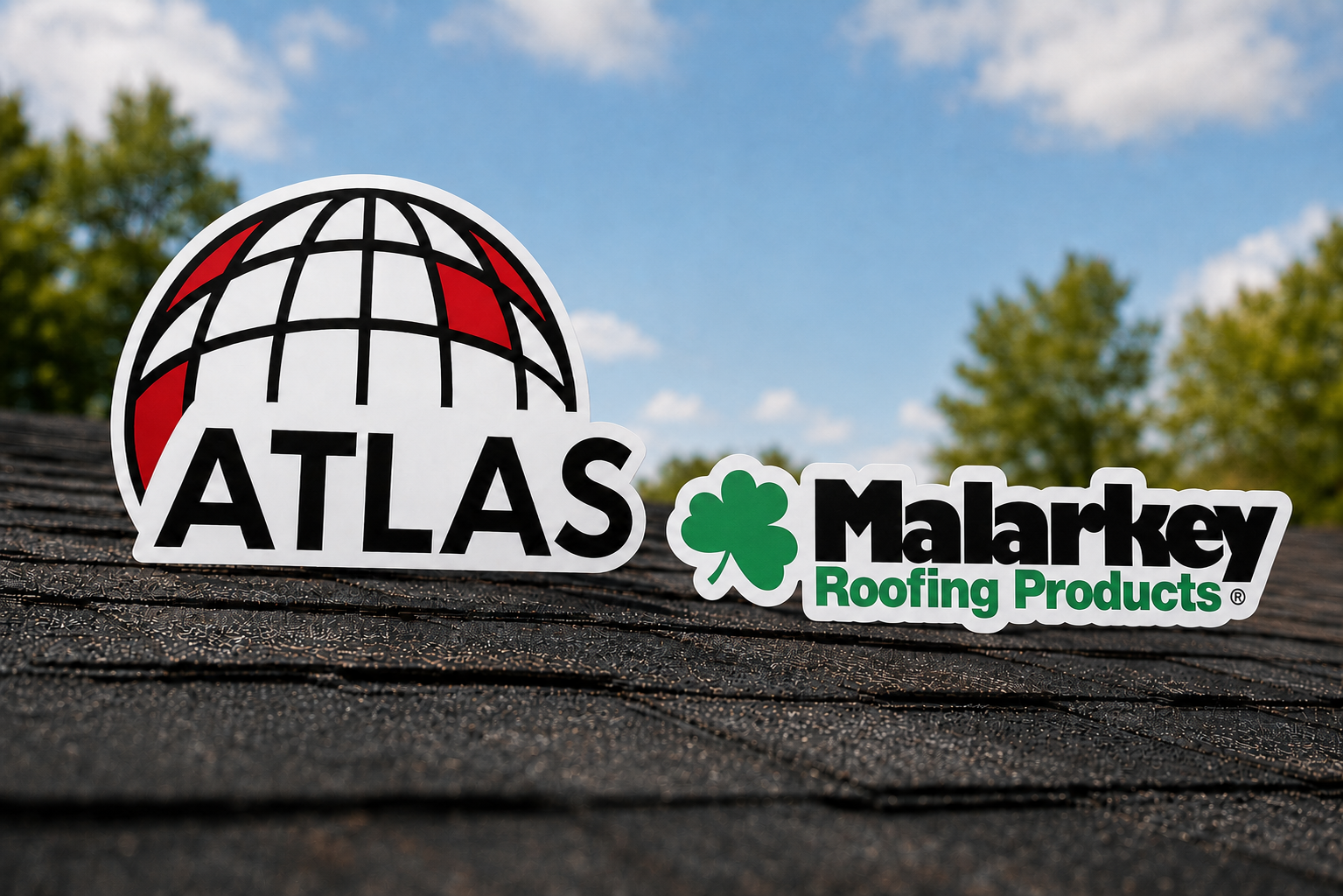
Some manufacturers offer enhanced warranty options when certified contractors install their roofing systems according to specific requirements.
Examples include programs from:
These programs often require approved products, specific installation procedures, and additional inspections before extended coverage becomes available.
What Matters More Than the Number of Years?
This is where many homeowners make mistakes.
Focusing only on warranty length can lead to choosing the wrong contractor.
In many cases, the details behind the warranty matter just as much as the number of years listed on the contract.
Clear Coverage Details
A five-year warranty with clearly defined coverage is often more valuable than a vague ten-year warranty.
Ask questions such as:
- What qualifies as a workmanship issue?
- What repairs are included?
- Are labor costs covered?
- Are material costs covered?
- Are there exclusions?
The clearer the answers, the easier the warranty will be to understand and use if a problem occurs.
What Is Actually Covered?
One of the most important questions homeowners can ask is:
“What does this warranty actually cover?”
Common workmanship-related issues that may be covered include:
- Improper shingle installation
- Incorrect flashing installation
- Fastener placement mistakes
- Ridge vent installation errors
- Leaks caused by installation defects
- Improper sealing around roof penetrations
Common exclusions often include:
- Storm damage
- Hail damage
- Fallen trees
- Manufacturer defects
- Normal aging and wear
- Homeowner modifications
Before signing a contract, ask the contractor for real-world examples of what would and would not qualify as a workmanship warranty claim.
The Company Behind the Warranty
A warranty is only as strong as the company backing it.
Look for:
- A local presence in the CSRA
- Strong customer reviews
- Consistent business history
- Responsive communication
- A proven service record
At South Point Roofing & Gutters, we often tell homeowners that the contractor’s reputation may be just as important as the warranty itself.
How Warranty Claims Are Handled
Even a strong warranty can become frustrating if the claims process is difficult.
Ask questions such as:
- Who do I contact if there’s an issue?
- How quickly are inspections scheduled?
- Is there a dedicated service department?
- Who performs warranty repairs?
A simple, clearly explained claims process is often a sign that a contractor expects to stand behind their work.
Comparing Roofing Warranties: A Real-World Example
Use Elementor’s table widget for the Company A vs. Company B comparison rather than typing it out as text.
Are Longer Warranties Always Better?
Not necessarily.
A longer warranty can be a positive sign, but only if:
- The company has a strong reputation
- The terms are clearly defined
- The coverage is realistic
- The claims process is straightforward
- The contractor has a history of honoring warranty commitments
A very long warranty with unclear terms may not provide the protection homeowners expect.
Questions to Ask Before Choosing a Roofing Contractor
When comparing roofing companies, ask:
- How long is your workmanship warranty?
- What specifically is covered?
- What is excluded?
- What would void the warranty?
- How are warranty claims handled?
- Who performs warranty repairs?
- Have you handled workmanship warranty claims in the past?
What Should You Compare After Looking at Warranty Length?
A workmanship warranty can range from a couple of years to a decade or more.
However, the most important factor isn’t simply how long the warranty lasts.
The best workmanship warranties combine reasonable coverage periods, clearly defined terms, reliable claims handling, and a contractor willing to stand behind their work.
After comparing warranty lengths, most homeowners have a new question:
How do different roofing companies compare when it comes to warranties, service, certifications, and long-term support?
To continue your research, take a look at these articles: